
Original MyFavi blog
Polestar 5: 884 HP, 800 Volts, and a Proper GT Mission
The Polestar 5 pairs supercar pace with bonded-aluminum construction, rapid charging, and a cabin designed for real grand touring.
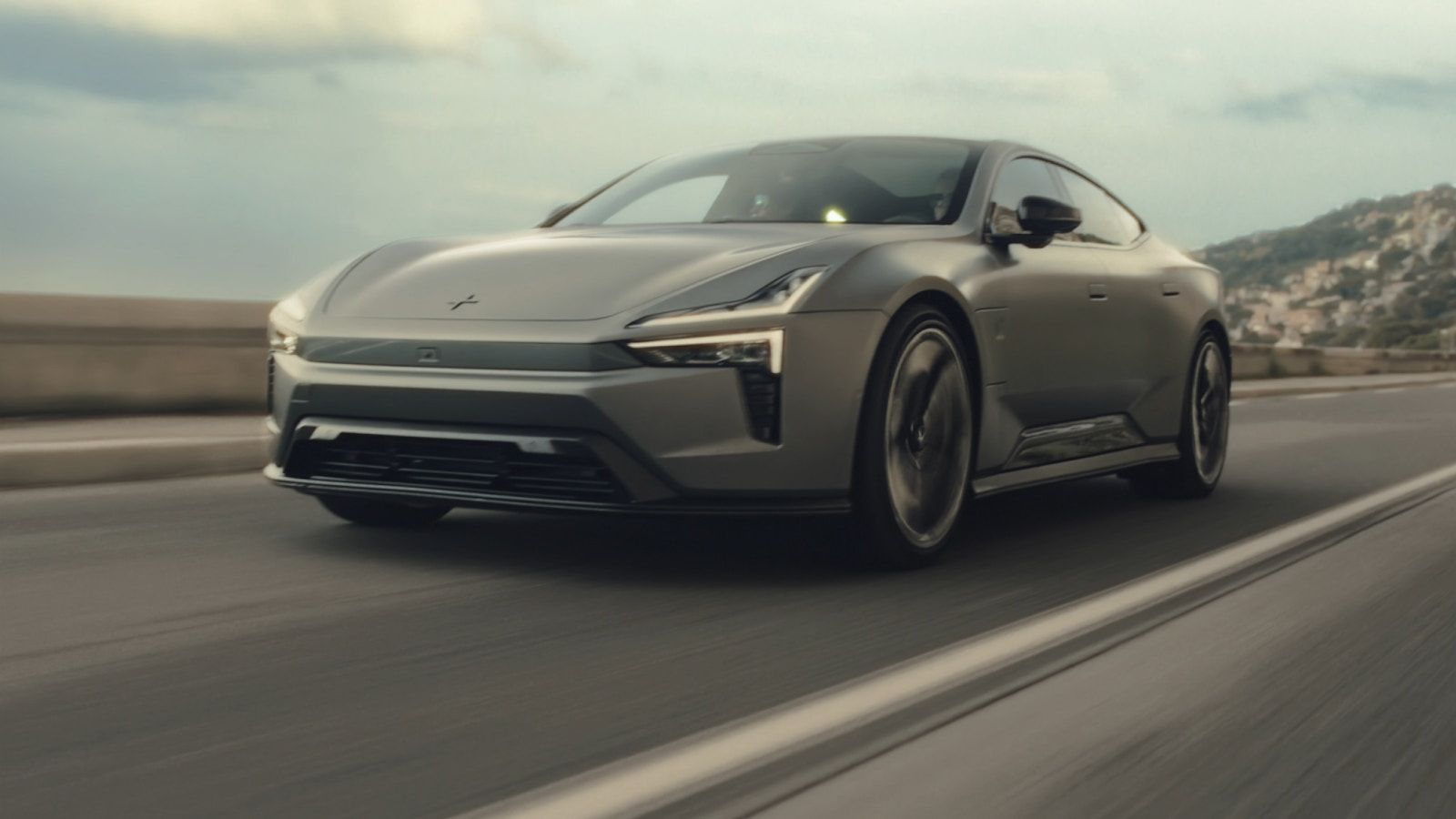
Polestar has spent years telling us the 5 would be more than a stretched luxury EV. Now the production car makes the argument with hardware: up to 884 horsepower, an 800-volt electrical system, a bonded-aluminum body, and the kind of low, broad stance that looks ready to inhale an unrestricted autobahn.
This is not an electric sedan chasing one spectacular acceleration number. The Polestar 5 is pitched as a performance Grand Tourer — a car meant to cover serious distance at serious speed without treating its passengers like ballast. On paper, at least, it may be the most convincing expression of that idea yet.
The Numbers Get Your Attention
Polestar will offer two dual-motor versions, and neither one is shy.
- Polestar 5 Performance: 650 kW (884 hp), 1,015 Nm (about 749 lb-ft), 0–100 km/h in 3.2 seconds, and up to 558 km (about 347 miles) of WLTP range
- Polestar 5 Dual motor: 550 kW (748 hp), 812 Nm (about 599 lb-ft), 0–100 km/h in 3.9 seconds, and up to 678 km (about 421 miles) of WLTP range
Those range figures use the European WLTP cycle, not the U.S. EPA test, so American shoppers should resist treating the mile conversions as future window-sticker numbers. Even so, the split between the two cars is interesting. The standard Dual motor is hardly the sensible slow one — 748 hp would have been hypercar material not long ago — while the Performance trades some headline range for an extra 136 hp and an even harder launch.
The rear motor matters as much as the combined output. Polestar says its in-house PX2 permanent-magnet synchronous motor can produce as much as 450 kW and 660 Nm in certain configurations. That rearward emphasis sounds exactly right for a driver's GT: all-wheel-drive traction when the road is slick, with the rear axle doing the conversational work when it is not.
An 800-Volt GT Built to Keep Moving
Straight-line speed is easy to advertise. A convincing electric GT also needs to recover range quickly, and the 5's 800-volt architecture enables a claimed peak DC charging rate of 350 kW. Polestar's preliminary figure for a 10-to-80-percent charge is 22 minutes on a sufficiently powerful rapid charger. Home AC charging tops out at 11 kW, with a quoted zero-to-100-percent time of 11 hours.
That 22-minute claim is the number road-trippers should watch. A Grand Tourer should turn a charging stop into a coffee break, not an extended layover. Real charging speed will still depend on battery temperature, charger performance, and the shape of the charging curve, but the electrical foundation is properly ambitious.
There is even a wonderfully nerdy detail: charging-status lights behind the rear side windows display the battery's progress from outside the car. It is a small thing, but anyone who has stood in the rain waking an app just to see whether an EV is still charging will appreciate it.
The Aluminum Structure Is the Real Enthusiast Story
The power figures will win the social-media battle. The body construction may be what gives the Polestar 5 a personality.
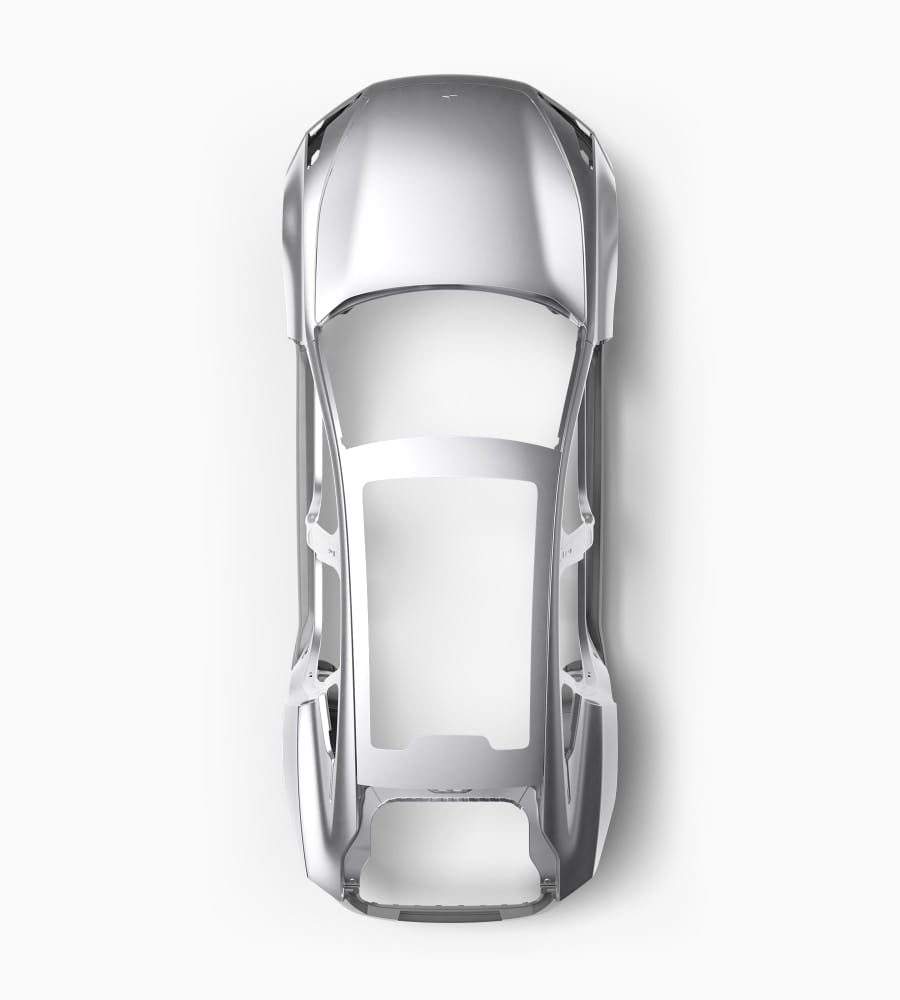
Polestar calls it the Polestar Performance Architecture. Rather than adapting an existing steel platform, the company developed an anodized, high-strength aluminum unibody joined with heat-cured adhesive. The goal is the familiar sports-car holy trinity: low mass, high torsional rigidity, and predictable control of loads through the chassis.
That matters because a rigid shell lets the suspension do the tuning instead of compensating for a flexing body. Polestar says the 5 aims for close to 50:50 weight distribution and a low center of gravity. The Performance version adds MagneRide adaptive dampers with three driver-selectable settings, while bespoke Michelin tires, staggered wheels, and four-piston Brembo front calipers complete a satisfyingly serious hardware list.
This is where the 5 starts to separate itself from the usual ultra-powerful EV formula. Polestar talks about steering fidelity, controlled damping, and suspension without intrusive electronic aids. We will need an actual road test to know whether that philosophy survives the inevitable mass of a large-battery GT, but these are the right engineering priorities.
It Looks Like the Precept Escaped the Auto Show
The production 5 grew out of the Precept concept, and remarkably little of the visual drama has been diluted. The nose is low, the roof rises only 142 cm (about 55.9 inches), the glazing sits flush, and the door handles disappear into the body. Active grille shutters balance cooling demand against drag.
At the rear, the full-width light bar bends downward at the corners and doubles as an aerodynamic element. There is no conventional rear window. That sounds like concept-car theater, but it allows the panoramic roof to extend behind the rear passengers' heads, creating more headroom while preserving the coupe-like roofline.
The proportions are the win. Many fast EVs look like tall sedans wearing aerodynamic apologies. The Polestar 5 looks like a GT first: long, planted, and almost shockingly clean. It does not need fake vents or an oversized grille to explain itself.
Four Adults Get the Grand-Touring Treatment
The cabin keeps the Scandinavian minimalism but avoids turning minimalism into deprivation. Recaro GT front seats establish the performance brief, while the two outer rear seats recline and can be equipped with ventilation, heating, and massage. A substantial rear center armrest holds individual climate and comfort controls; fold it away and an occasional third rear seat appears farther forward to preserve elbow room.
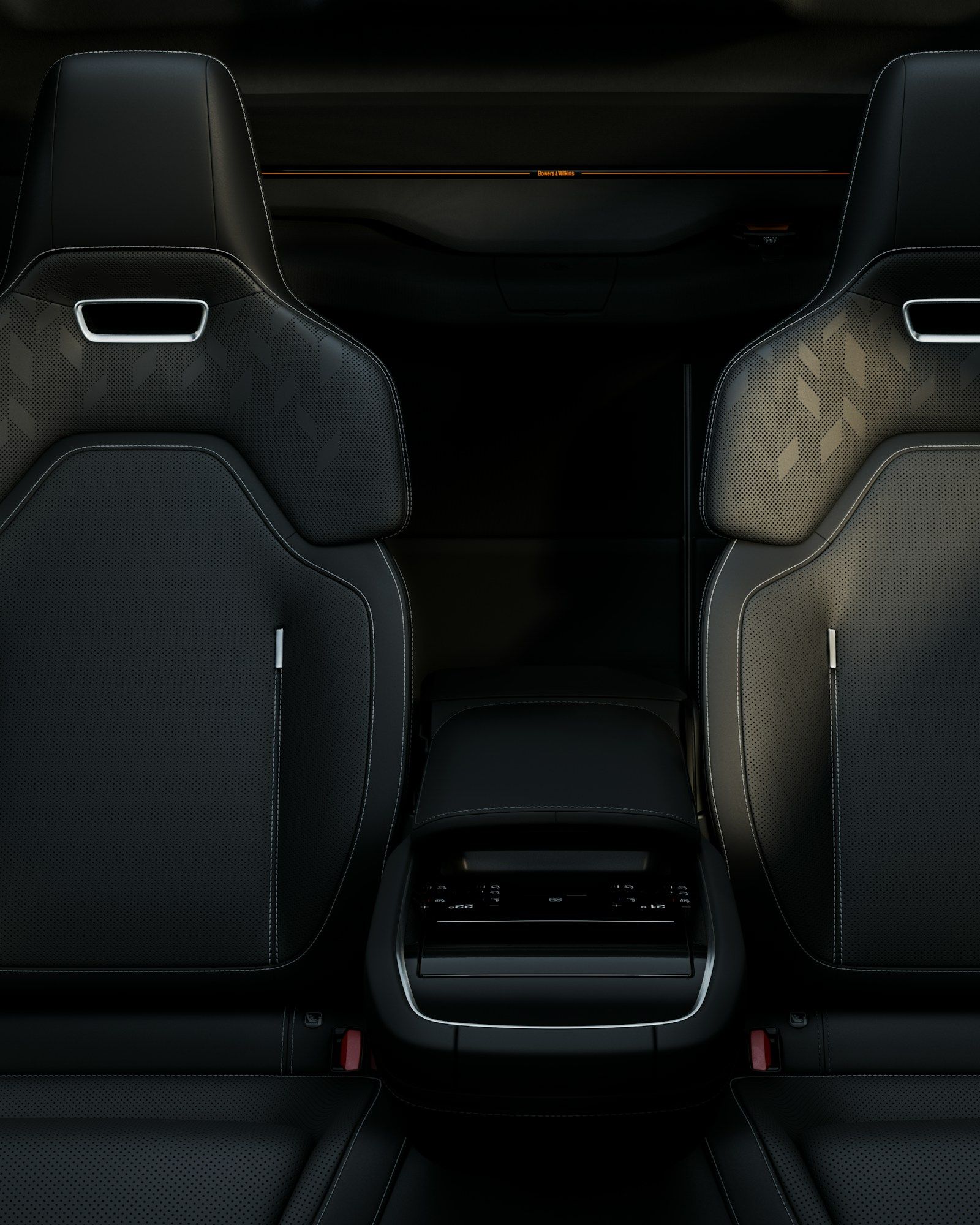
Practicality has not disappeared beneath the tailoring. Polestar quotes 365 liters of rear luggage space, expanding to 1,128 liters with the rear seats folded, plus a 62-liter front trunk. The panoramic roof blocks a claimed 99.5 percent of incoming ultraviolet radiation. Available active road-noise cancellation uses four cabin microphones and six accelerometers, while a PM2.5 filtration system monitors fine particles outside the car.
Material choices are equally deliberate. The standard vegan MicroTech combines bio-attributed vinyl with a recycled-polyester carrier. Available Bridge of Weir leather is chrome-free and traceable, the MicroSuede headliner uses more than 35 percent recycled PET yarn, and the front seat backs use a partly bio-based flax-and-polypropylene ampliTex weave.
Performance With a Carbon Receipt
An 884-hp luxury EV is still a large, resource-intensive object, but Polestar publishes useful numbers instead of pretending otherwise. The company lists a 23.8-tonne CO₂e cradle-to-gate footprint for the Dual motor version, covering emissions from raw-material extraction until the car reaches its customer.
The aluminum story is particularly specific: 83 percent of the aluminum secured for the 5 comes from smelters using renewable electricity, while 13 percent is recycled. Polestar says that sourcing avoids more than 14 tonnes of CO₂e compared with using standard aluminum available in China. Renewable electricity also powers the vehicle assembly plants and production of several battery-related materials.
Those figures do not make the car impact-free. They do make its impact easier to examine — and that is a more credible approach than a vague green halo around a very fast luxury machine.
Why the Polestar 5 Matters
The Polestar 5 is exciting because its specs support a coherent mission. The powertrain is ferocious, but it sits inside a bespoke structure. The charging system is fast because the car is supposed to travel. The rear seats matter because a GT should be desirable from every chair. Even the sustainability work is attached to measurable sourcing decisions.
There are still important blanks. Polestar's global pages do not provide U.S. pricing, EPA range, or final market-specific equipment, and the company notes that availability can vary by region. The 350 kW charging and charging-time figures are also preliminary. Until independent tests arrive, the 5 remains a persuasive collection of claims rather than a proven driver's car.
But what a collection. If the production car delivers the steering feel, body control, and high-speed composure promised by its hardware, the Polestar 5 will not merely be a quicker luxury EV. It could be one of the rare electric cars that makes enthusiasts want the battery-powered future for reasons beyond acceleration.
Official Sources
- Polestar 5 overview
- Polestar 5 performance, specifications, and charging
- Polestar 5 interior and cargo details
All specifications and availability statements are based on Polestar's global product pages as accessed July 21, 2026. WLTP range is not directly comparable with EPA range. Charging figures are preliminary, and equipment may vary by market.