The listing prices on your screen are lying to you — and the number they are hiding is the one that decides what your car actually sells for.
If you are selling a daily driver for the first time — say, an $8,000–$20,000 car in the DMV area — you do not need a dealer's instincts. You need two book values, a short list of local cars like yours, and two prices you settle before the first buyer calls: your asking price and your walk-away price. This guide works through all of it, in order.
How do I price a car for a private sale?
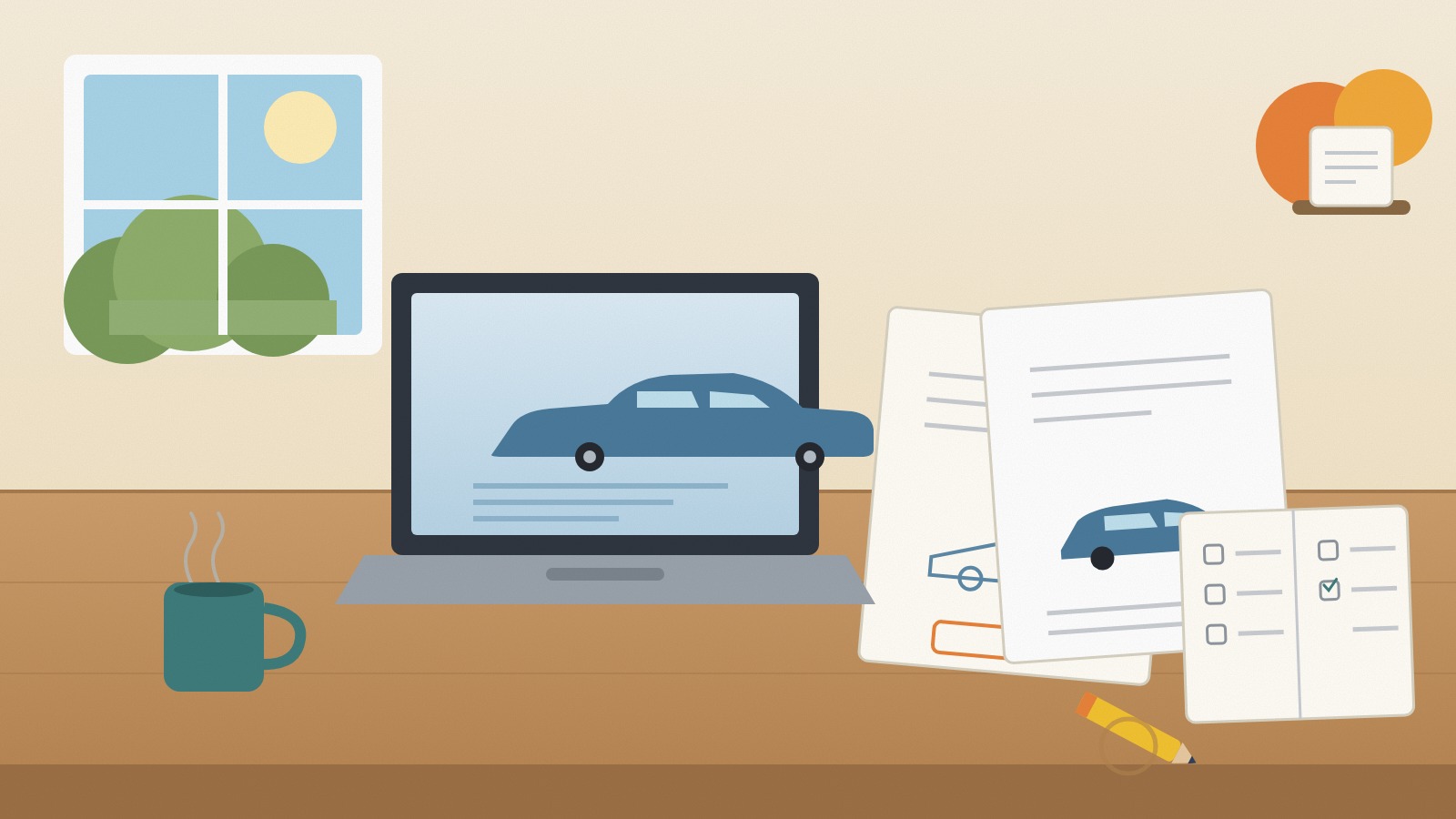
Pricing a car for a private sale comes down to three steps:
- Step 1: Look up your car's KBB Private Party Value and its Edmunds True Market Value.
- Step 2: Find 5–10 local listings for cars like yours — same year, trim and mileage.
- Step 3: Take the median of those prices, then adjust it for condition, accidents and repairs.
That adjusted median is what your car is actually worth on the private market. Your asking price sits a little above it. Your walk-away price sits just below it. Everything in this guide builds toward those three numbers.
Why do asking prices lie about what a car is worth?
An asking price is a wish. A sale price is a fact. The gap between the two is why browsing listings is a poor way to price your car: the listings you see are the cars that have not sold yet, and the cars priced too high are the ones that sit there longest — which makes them exactly the listings you are most likely to find.
Only prices that buyers actually paid tell you what a car is worth. Book values are built from real sales, and local comps show what sellers near you are getting right now. Use both, and ignore the number on the most optimistic listing.
The market your car is entering is still strong. Used-car values held through 2026, and the cheapest cars are the scarcest of all:
| Measure | Late 2026 |
|---|---|
| Cox Manheim Used Vehicle Value Index (Oct) | 206.8 — up 0.5% from September, +2% year over year |
| Average used-car listing price (Aug) | $27,239 — up 7% year over year |
| Share of used-car listings under $15,000 | 15.1% |
| Average price of a 3-year-old used car | $32,461 (Edmunds) |
Source: Cox Manheim Used Vehicle Value Index, October 2026; Cox/Autotrader listing data via ConsumerAffairs, October 8, 2026; Edmunds.
Only 15.1% of used cars listed in 2026 were under $15,000, according to Cox/Autotrader data reported by ConsumerAffairs (October 8, 2026). A clean, ready-to-drive car in the $8,000–$20,000 range is exactly what buyers are hunting for — and the reason a well-priced one does not sit for long.
Step 1: What are KBB Private Party Value and Edmunds True Market Value?
Start with the two free valuations every private seller should get:
- KBB Private Party Value — what a car like yours typically sells for between private parties. This is the number to start from, not the trade-in value, which is what a dealer would pay you and is almost always lower.
- Edmunds True Market Value (TMV) — an average of real sale prices for your car in your area. It is a second opinion built from transactions, not listings.
Enter your year, make, model, trim, mileage, options and condition honestly — the condition grade matters more than most sellers expect, and overstating it only sets you up for a buyer to talk you down. Write down both numbers and the range each one gives you. If the two disagree by a wide margin, do not pick your favorite: Step 2 is the tiebreaker.
Step 2: How do I find 5–10 local comps that actually match my car?
A comp is a listing for a car close enough to yours that a buyer would cross-shop the two. Search the places buyers in the DMV actually look — Facebook Marketplace, Craigslist and Autotrader — for cars matching yours on:
- Same year and trim — a base model and a top trim of the same car are different cars to a buyer.
- Mileage within about 20% — a car with 60,000 miles is not a comp for one with 120,000.
- Same condition — a one-owner car with full service records is not a comp for one with a salvage title.
Stay local, within about 50 miles, and use private-party listings: dealer asking prices include reconditioning, a warranty and a sales team's time, so they run higher than what a private seller gets. The more like-for-like your list is, the more the median in Step 3 means something. A listing that has sat for weeks at the same price is a warning, not a comp — it is priced above what buyers will pay.
Step 3: Why should I use the median — and how do I adjust it?
Line up your 5–10 comp prices from low to high and take the middle one. That is your median. It is the right number because one very high or very low listing cannot drag it around the way it drags an average. Say your comps are $11,000, $12,000, $12,500, $13,000 and $17,500: the average is $13,200, but the median is $12,500 — and $12,500 is the price the market keeps coming back to.
Then adjust that median for your car, in the open, on paper:
- Condition — a car that needs a detail job, has worn tires or a dented fender is worth less than a clean one at the same mileage. A pre-sale inspection quote makes this defensible, and you can show the buyer the math.
- Accident history — a repaired accident still counts. Buyers check vehicle history reports, so price it in before they find it.
- Repairs needed — subtract what it would take to fix the car properly, from a real quote, not a guess.
The adjusted median is your car's private-sale value. You can defend it to a buyer, because it is not your opinion — it is two book values and 5–10 real listings.
How do I set my asking price and walk-away price?
Two prices, two jobs:
- Your asking price is the number on the listing. Set it a little above your adjusted median — enough room to negotiate and to let a buyer feel they won something — but close enough that the listing earns calls. An asking price far above the median just makes buyers scroll past.
- Your walk-away price is the lowest figure you will accept. Decide it before you list and write it down. If an offer comes in below it, you walk away — no matter how long the buyer has been talking.
Keep both prices on your worksheet, and do not let the first offer reset them. If a buyer needs to check what the car will cost them month to month, point them to MyFavi's monthly payment vs. total cost calculator or the car affordability calculator — a buyer who can afford the car is a buyer who can close.
What if no one calls in the first week?
Silence in the first week is information, not bad luck. If the photos are clear, the listing is honest and the car is described well, the price is the most likely cause. The sequence that works:
- No calls or messages at all in the first seven days: the price is too high. Make a clear, visible cut and update the listing the same day.
- Calls but no one comes to see the car: you are close on price, but something in the listing — photos, description, history — is holding buyers back.
- Viewings but no offers: the car or the price is the problem, and a buyer standing in front of it can see both. This is the point to check the comps again, not to keep dropping.
Change one thing at a time and give each change a few days. Dropping the price every day just signals desperation, and it teaches buyers to wait you out.
Is November a good time to sell a used car?
Yes — late fall is one of the best windows to list a used car, and the data backs it up:
| Period | What buyers found |
|---|---|
| November | 31.7% of buyers found a deal |
| December | 46.2% of buyers found a deal |
| January | 44.1% of buyers found a deal |
| Black Friday | 34.8% more deals than on an average day |
Source: iSeeCars, "Best Times to Buy a Used Car," updated November 9, 2026. Analysis of 42M+ used-car sales from 2025–October 2026. A deal means a purchase at least 10% below the estimated fair market value.
A "deal" for a buyer is a discount for a seller, so a busy season is not a reason to price on hope. It is a reason to price on the evidence in Steps 1–3, list while buyers are looking, and let the market do the work.
After we agree on a price, what paperwork comes next?
The price is only half the sale. In Virginia, the seller's steps after agreeing a price are:
- Sign the title over to the buyer — complete the assignment on the back of the title, and the odometer disclosure.
- Complete the price certification the DMV requires, on the title or the form the DMV provides.
- Write a bill of sale with the buyer and seller's names, the vehicle, the date and the agreed price, signed by both of you.
- Keep your license plates. Plates stay with the seller in Virginia.
- Confirm the payment has settled before the keys change hands. Never trust a payment screenshot, and verify any cashier's check with the issuing bank. Our scams guide walks through the payment tricks sellers actually face.
- Remind the buyer of the 30-day deadline to title and register the car. The buyer also pays the 4.15% sales and use tax at titling, with a $75 minimum.
Virginia does not require the seller to get a safety inspection before a private sale — that is the buyer's responsibility.
Selling to a Maryland buyer, or buying in Maryland? The steps are different — here is Maryland's title transfer checklist. For the full Virginia walkthrough, step by step, read How to Sell a Car Privately in Virginia.
What pricing mistakes should I avoid?
- Pricing from one source only. One book value or one listing is a guess. Two book values and 5–10 comps are a price.
- Using the average instead of the median. One hopeful listing can pull your average far above what buyers will pay.
- Trusting asking prices. The cars you see listed are the cars that have not sold. Sold prices are the only prices that count.
- Pricing from what you paid or still owe. Your loan balance is not the car's value, and buyers do not care what you paid.
- Adding a premium for what the car means to you. New tires and good service records count. Sentiment does not.
- Listing with no walk-away price. If you have not decided the lowest figure you will take, the buyer's first offer will decide it for you.
- Hiding an accident or a needed repair. A buyer will find it in the history report or the inspection — and a surprise at that stage ends the sale.
- Dropping the price every day. Make a real, visible move, then wait. Daily cuts only teach buyers to wait longer.
Private Sale Pricing Worksheet
Fill in each line before you list the car:
- KBB Private Party Value: $______
- Edmunds True Market Value: $______
- Comp 1–10 (same year, trim and mileage): $______
- Median of comps: $______
- Adjustments: condition $______ · accidents $______ · repairs needed $______
- Adjusted value (your car's private-sale value): $______
- Asking price: $______
- Walk-away price: $______
- Date to cut the price if no one calls in 7 days: ______
Private Sale Checklist — Title, Paperwork & a Safe Sale
- KBB and Edmunds values looked up and written down
- 5–10 local comps collected, median calculated, adjustments written down
- Asking price and walk-away price written down before listing
- Photos taken in daylight; listing honest about condition, mileage and history
- Title in hand and signed over correctly, with the odometer disclosure completed
- Price certification completed the way the Virginia DMV requires
- Bill of sale written and signed by both parties
- Payment confirmed settled before the keys change hands — never trust a payment screenshot; verify cashier's checks with the issuing bank
- License plates kept; buyer reminded of the 30-day title deadline
Sources: iSeeCars, "Best Times to Buy a Used Car" (updated November 9, 2026); Cox Manheim Used Vehicle Value Index (October 2026); Cox/Autotrader listing data via ConsumerAffairs (October 8, 2026); Edmunds; Virginia DMV.
Written by MyFavi Team
MyFavi's car-buying guidance is independent — no dealer ties, no sponsored picks. We check every price and claim against its source before we publish.
Topics
- private sale
- pricing
- used cars
- sell your car
Share this article
The MyFavi newsletter
Save money on your next car
Get notified on deals, price drops, and buying hacks, once a week.