
Original MyFavi blog
2027 Lucid Gravity GT-S: 1,070 HP for the Three-Row EV
The 2027 Lucid Gravity GT-S brings 1,070 hp, a claimed 3.1-second 0–60 time, projected 373-mile range, and a $125,900 price.
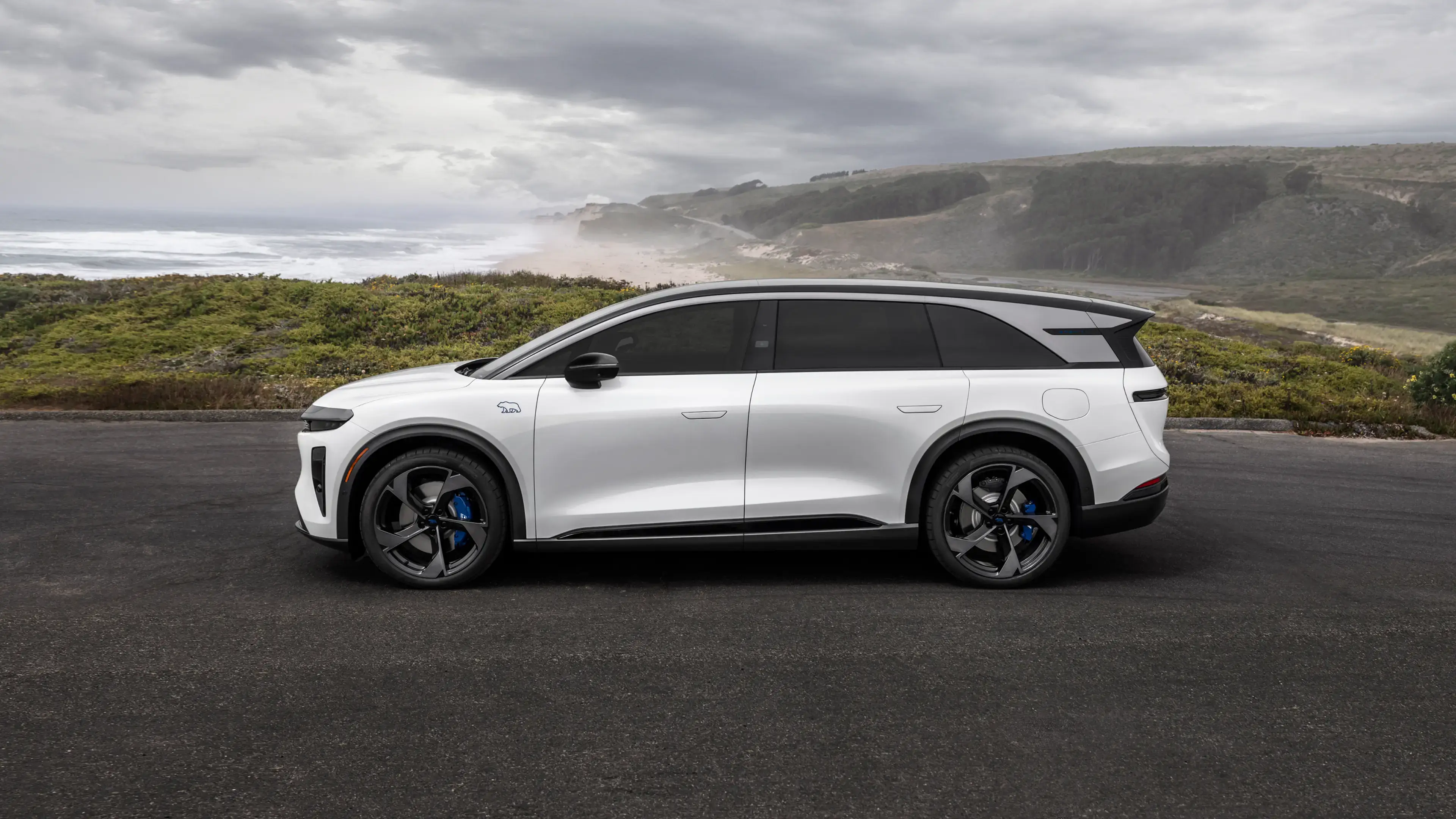
Lucid has looked at an 828-horsepower, three-row electric SUV that already reaches 60 mph in 3.4 seconds and decided it needed another 242 hp. The result is the 2027 Lucid Gravity GT-S: a 1,070-hp family hauler with a manufacturer-claimed 3.1-second sprint to 60 mph, a 155-mph top speed, and enough blue trim to let the school-run crowd know this is not the ordinary one.
Ordinary is relative here. The Lucid Gravity GT-S starts at $125,900 before destination, taxes, options, and other fees. It arrives in late 2026, carrying a manufacturer-projected 373 miles of range and the same basic promise that makes every Gravity interesting: three usable rows, a low-slung shape, serious charging hardware, and packaging that refuses to accept the usual performance-SUV compromises.
The Headline Numbers Are Appropriately Unreasonable
Lucid's opening argument is a short and spectacular specification sheet:
- Maximum power: 1,070 hp
- 0–60 mph: 3.1 seconds, manufacturer claimed
- Top speed: 155 mph
- Projected range: 373 miles, not yet EPA certified
- Charge to 200 miles: 14 minutes on a 400-kW DC fast charger, manufacturer estimated
- Starting price: $125,900
- Availability: Late 2026 as a 2027 model
The GT-S makes 242 hp more than the Gravity Grand Touring, yet Lucid's claimed 0–60 time improves by only three-tenths of a second. That is not an indictment of the extra power. It is a reminder that launching a large, all-wheel-drive SUV is already a traction-management exercise. Once a vehicle is this quick, every additional tenth asks a great deal from the tires, control software, and road surface.
What that power should change more dramatically is acceleration after the launch. Lucid has not published GT-S quarter-mile or passing figures on the product page, so we will not invent them. But 1,070 hp should make the shove at highway speeds every bit as outrageous as the standing-start claim suggests.
Lucid does not describe the GT-S as a Gravity Sapphire or make the sort of track-focused promises attached to the Air Sapphire. The GT-S reads instead as the most intense version of the familiar Gravity formula — enormous output, all-wheel-drive traction, and family-SUV versatility without turning the vehicle into a dedicated circuit special.
The Chassis Hardware Matters More Than the Launch Number
The most encouraging part of the GT-S pitch is that Lucid talks about more than output. Rear-wheel steering is standard fare in the performance highlights, tightening low-speed maneuverability and helping stability at higher speeds. That is valuable in a vehicle whose job includes both attacking a back road and fitting into a crowded parking garage.
The three-chamber adaptive air suspension can lower the body at speed, balancing aerodynamics, body control, and ride comfort. Lucid also gives the GT-S an enhanced launch mode. The company sensibly warns owners to use it only in a safe environment and never to race on public roads — advice worth repeating when a three-row SUV can match the acceleration of serious sports cars.
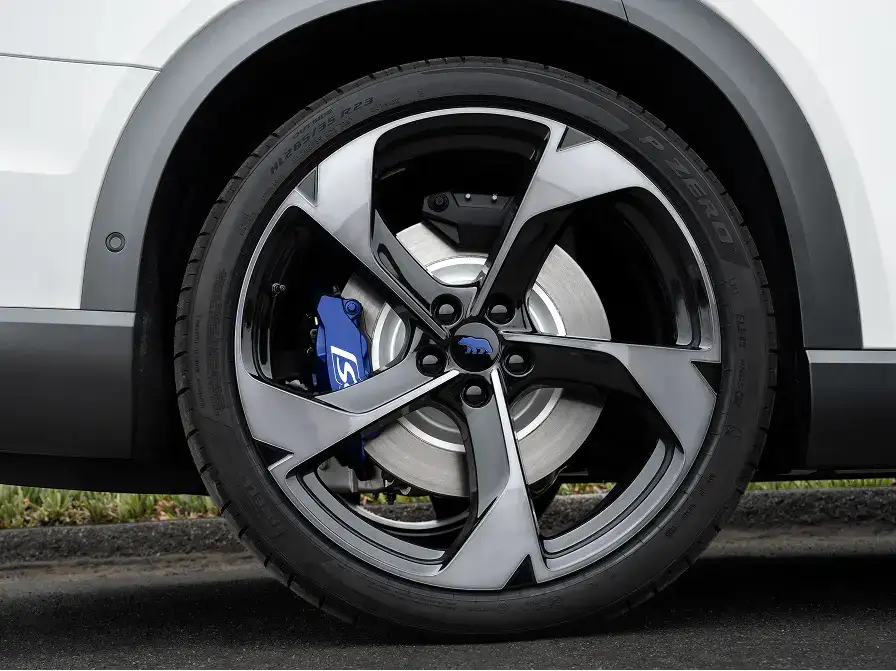
The available wheels span 21 to 23 inches. Large wheels look right beneath the Gravity's long body and create room for substantial brakes, but buyers interested in real-world ride quality, tire cost, and efficiency should resist automatically selecting the biggest set. Lucid has not yet published configuration-specific GT-S range ratings, and a projected headline figure rarely survives every wheel-and-tire choice unchanged.
This is also where independent testing will matter. A 3.1-second launch proves the powertrain can deploy enormous force in a straight line. It does not tell us how the steering loads up, how consistently the brakes manage repeated stops, or whether the air suspension can keep a tall, heavy EV composed without making the ride brittle. Lucid has assembled the right ingredients; a road test still needs to tell us how they taste together.
Range Is Strong, but the Grand Touring Goes Farther
The GT-S carries a manufacturer-projected 373 miles of range. Lucid explicitly says the official EPA estimate will follow, so 373 miles should not yet be treated as a window-sticker number.
For context, Lucid advertises up to 450 miles of EPA-estimated range for the 828-hp Gravity Grand Touring when it is equipped with the range-favoring 20-inch front and 21-inch rear wheels and configured with two rows and five seats. The GT-S projection is 77 miles lower than that best-case Grand Touring figure. The comparison is not perfectly like-for-like until the EPA rating and configuration details arrive, but the direction is clear: maximum performance gives back some of the Gravity's extraordinary range advantage.
Even so, a projected 373 miles would be a serious road-trip number for a 1,070-hp three-row EV. It would also put the GT-S well beyond the point where many owners should worry more about charging speed, charger reliability, and their own break schedule than the raw capacity of the battery.
Lucid says the GT-S can add 200 miles of range in 14 minutes when connected to a 400-kW DC fast charger under suitable conditions. A native NACS port opens access to compatible Tesla Superchargers, while the vehicle can also use other major public fast-charging networks. Actual speed will depend on the charger's voltage and power, battery temperature, state of charge, vehicle configuration, and conditions at the site.
Buyers new to battery-powered cars should treat the peak claim as one part of the ownership equation. Home charging will handle most daily miles for many drivers; public charging matters most on longer trips. Our EV ownership and home-charging guide explains the practical questions to answer before bringing any electric SUV home.
The Blue Details Do Most of the Talking
Lucid has not tried to make the GT-S look like an electric touring-car refugee. The body remains clean and aerodynamic, with no giant wing or collection of fake vents. Four exterior colors and two interior themes are listed, while blue brake calipers provide the most obvious exterior signal that this Gravity has four-digit horsepower.
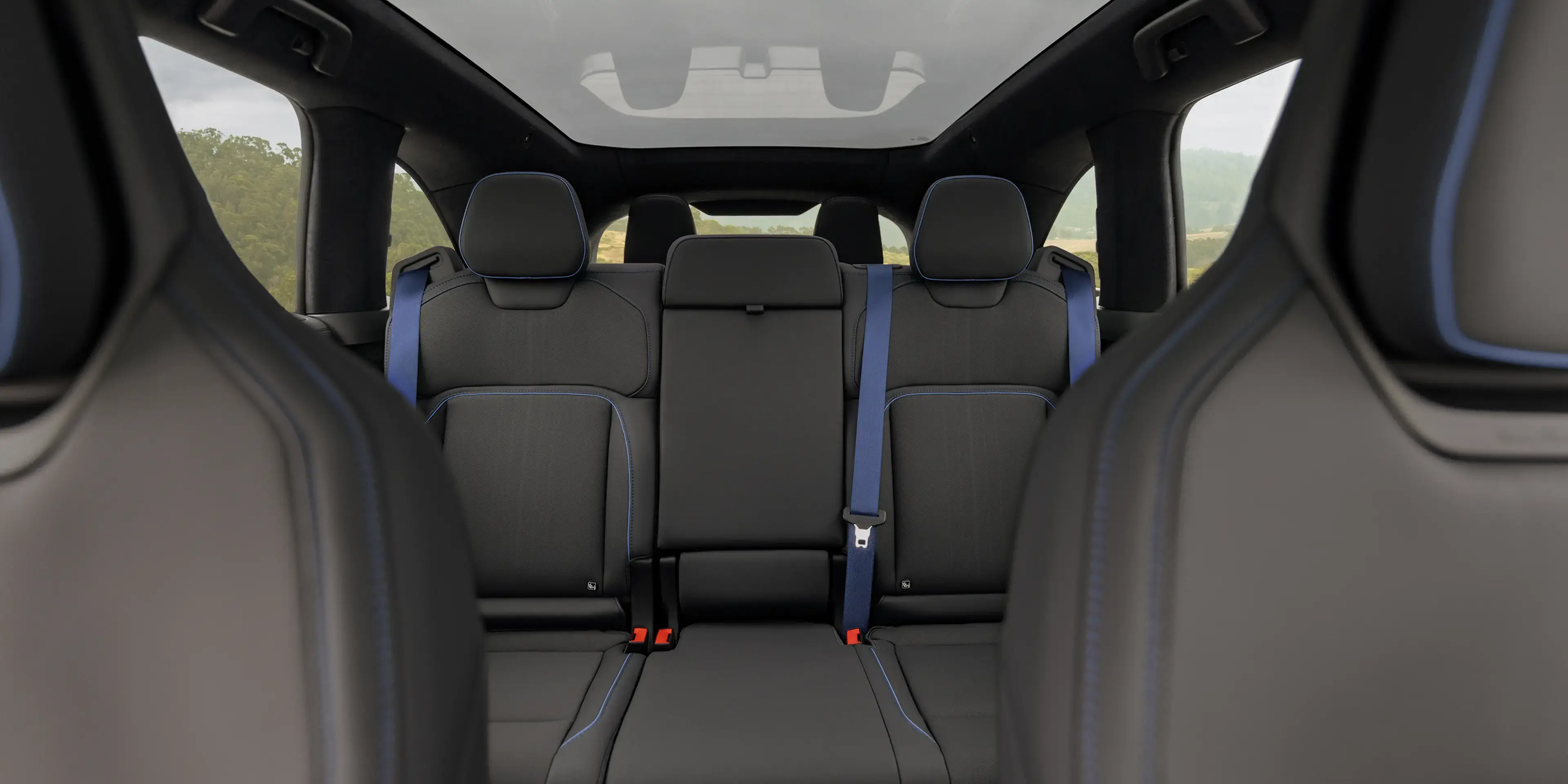
Inside, blue stitching, piping, seatbelts, and steering-wheel details carry what Lucid calls the spirit of Sapphire. The accents work because the underlying cabin is so calm. The Gravity's broad displays, airy glasshouse, and fold-flat seating remain central; the GT-S adds occasion without sacrificing the reason someone chose a three-row SUV.
That restraint will divide enthusiasts. For some, a $125,900 performance flagship should announce itself from the next county. Others will appreciate a machine that can disappear into upscale school traffic until the road opens. We land in the second camp, though a trim-specific paint color or wheel design would have made the GT-S feel more distinct without spoiling the shape.
GT-S vs. Grand Touring vs. Touring
The decision becomes clearer when the three 2027 Gravity trims are placed side by side.
| Specification | Gravity Touring | Gravity Grand Touring | Gravity GT-S |
|---|---|---|---|
| Starting price | $79,900 | $98,900 | $125,900 |
| Maximum power | 560 hp | 828 hp | 1,070 hp |
| Claimed 0–60 mph | 4.0 sec | 3.4 sec | 3.1 sec |
| Advertised range | Up to 337 mi EPA-est. | Up to 450 mi EPA-est. | 373 mi projected |
| Claimed time to add 200 mi | 15 min | Under 11 min | 14 min |
The GT-S costs $27,000 more than the Grand Touring and $46,000 more than the Touring before options and fees. That premium buys the biggest number, the quickest launch, the higher top speed, and the trim-specific details. It does not buy the longest-range Gravity.
For most households, the Grand Touring is the sweet spot. Eight hundred twenty-eight horsepower is already excessive, its best-case EPA range is exceptional, and the $27,000 difference can fund a home charger, years of insurance and tires, or a second enthusiast car that weighs considerably less. Even the 560-hp Touring reaches 60 mph in a claimed four seconds, which would have qualified as supercar acceleration within recent memory.
The GT-S is for a narrower buyer: someone who wants the fastest regular-production expression of the Gravity, values the exclusivity of a four-digit power figure, and accepts the range and price tradeoffs. Rationality is not absent from that choice, but it is not in the driver's seat.
The Enthusiast Verdict, for Now
The 2027 Lucid Gravity GT-S is both absurd and impressively coherent. Its 1,070 hp earns the headlines, but rear-wheel steering, adaptive air suspension, rapid charging, and a projected 373-mile range are what make the premise more than a party trick. Lucid has kept the useful cabin and restrained design intact while turning the performance dial until the knob came off.
There are reasons to wait before declaring it the definitive performance EV SUV. The range is not yet EPA certified. The acceleration, charging, and top-speed figures are manufacturer claims. We do not have independent braking, handling, or repeat-performance results, and Lucid has not published every configuration-specific specification.
But as a statement of what modern EV hardware can do, the GT-S is difficult to ignore. It can carry a family, fold its seats for a cargo run, charge at genuinely ambitious speeds, and — in the right place, under the right conditions — leave machinery with far more theatrical bodywork staring at its taillights. Nobody needs a 1,070-hp three-row SUV. The fact that Lucid built one this understated may be exactly why enthusiasts will want to talk about it.
Official Sources
- 2027 Lucid Gravity GT-S overview, specifications, and imagery
- Lucid Gravity range, charging, space, and trim overview
- Lucid Gravity configurator
All specifications, prices, equipment, and availability statements are based on Lucid's official U.S. pages as accessed August 14, 2026. Prices exclude destination, taxes, title, license, options, and other fees. The GT-S range is manufacturer projected, not yet EPA certified. Acceleration, top-speed, and charging figures are manufacturer claims; actual results vary with configuration and conditions.