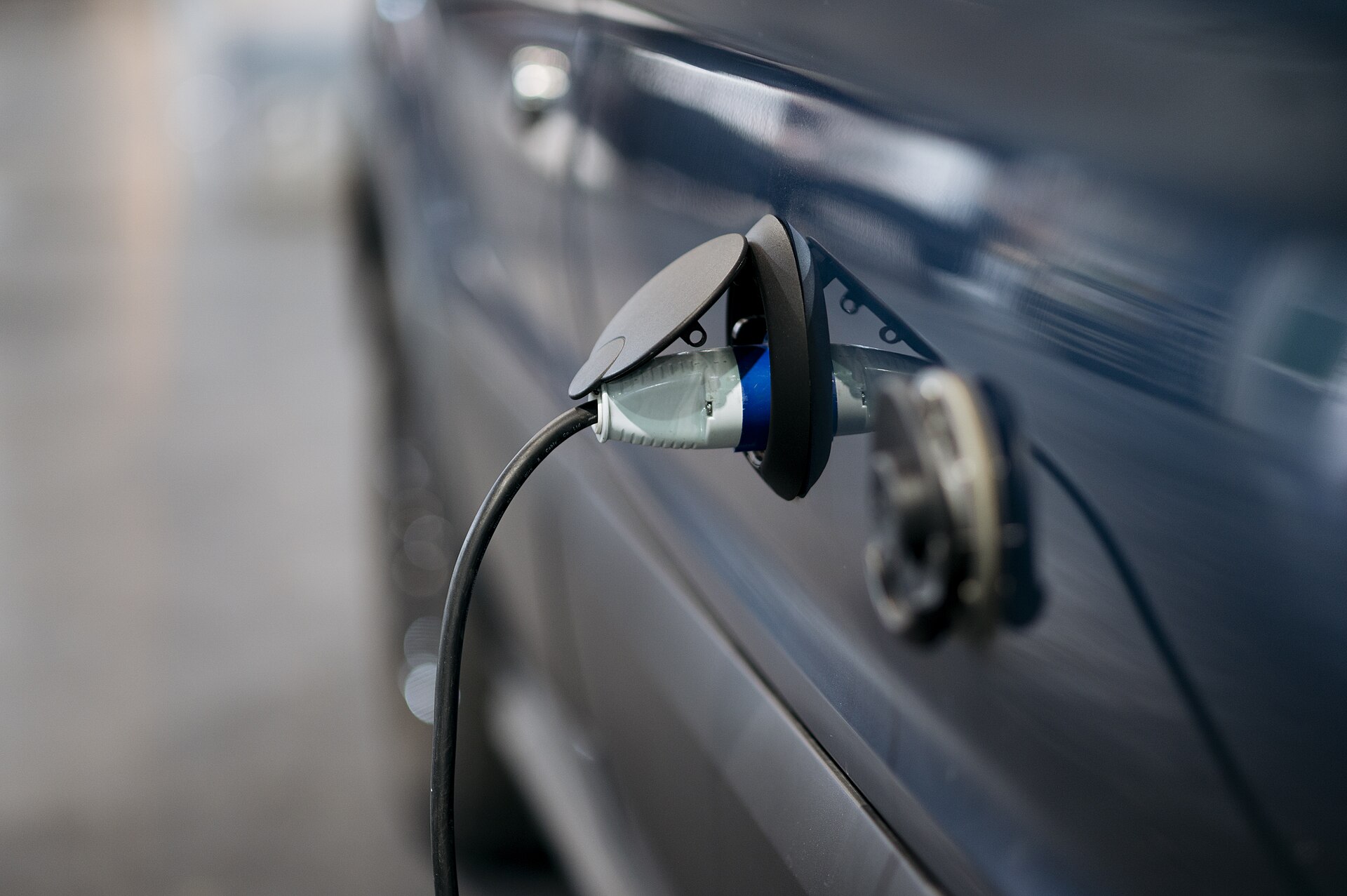
GM says the 2026 Cadillac Optiq has a built-in NACS port. The other EVs in its 2026 list use a CCS port. They need the right adapter at a NACS fast charger.
The Cadillac group includes the Escalade IQ, Escalade IQL, Lyriq, and Vistiq. The list also includes the Chevrolet Blazer EV, Equinox EV, and Silverado EV. GMC models are the Hummer EV Pickup, Hummer EV SUV, and Sierra EV.
A NACS plug does not mean every charger will work with every car.
The adapter need flips for 2027 models
GM expects all of its 2027 EVs to ship with NACS ports. Those cars should not need an adapter at a matching NACS charger.
They will need a NACS-to-CCS adapter at a CCS charger. The car, adapter, station, and network must all match. Charge speed can also change with the car and battery state.
Energy Pass links several charge networks
On August 13, GM said Energy Pass worked with Tesla Supercharger, IONNA, Electrify America, and ChargePoint. EVgo support was still planned. Some sites can start and bill a charge after a one-time setup.
Network access can change. Check the GM app and the live station page before you count on a charger for a trip.
Check the plug before you buy
Confirm the exact model year and charge port. Do not rely only on the model name.
Ask if the right GM-approved adapter comes with the car or costs extra.
Check the networks and stations on your normal routes. Make sure the car can use them.
Add home gear, electric work, adapters, and public charge prices to your budget.
Primary references
Sources and methodology
MyFavi links to the original material so you can verify the details, reporting period, and later updates.
Publisher and data provider
General Motors
Source classification
Manufacturer notice
Dataset or report
GM NACS charging compatibility guide
Reporting period
2026 and 2027 model-year General Motors electric vehicles
This article sums up GM's August 13 guide. Car gear, adapter stock, network access, charge speed, and app support can change. Check the exact car and current GM steps before you buy or travel.
A final federal rule lowers projected 2031 fleetwide fuel-economy requirements and estimates lower compliance costs but higher fuel use than the standards it replaces.
A proposed multistate settlement would erase an estimated $634 million in auto-loan debt, fund $60 million in restitution, and add protections for future Credit Acceptance borrowers.
FTC staff says a dealer's advertised price must be available to any buyer and include mandatory dealer fees, leaving out only government-required consumer charges.
Arizona guidance says dealer-sold used cars have a 15-day or 500-mile defect window, while vehicle purchases generally lack a three-day cancellation right.
The FTC warns that scammers are cloning real dealership websites and demanding upfront payment for vehicles the legitimate dealer does not have or know about.
Experian reports that completed auto refinances lowered payments by $83 a month on average in Q2, while hybrids had the lowest average new-vehicle payment by powertrain.
Observed auto-loan data put average monthly payments at $785 for new vehicles and $544 for used vehicles, with amounts financed also higher than a year earlier.
An FTC and Connecticut deal would put $4 million toward buyer refunds. It would require one dealer to show its top total price and get consent for each fee.
A 68,084-owner study found passenger screens were rarely used and among the most problem-prone new-car technologies, while simpler background features scored better.
A federal court temporarily halted a credit-repair network after the FTC alleged false promises, creditor impersonation, illegal advance fees, and unauthorized recurring charges.
TransUnion finds auto-loan fraud losses climbed far faster than fraud rates from Q3 2018 to Q3 2025, as fraudsters increasingly target higher-value accounts and 'credit washing' erases an estimated $10 billion in charged-off debt.
Cox Automotive's mid-August Manheim index fell 1.2% from July while holding roughly flat versus a year earlier, as wholesale values eased after a strong spring.
EIA's September 29 release puts regular gasoline at $4.465 a gallon nationwide and diesel at $6.382, with both easing from the prior week but remaining well above a year earlier.
The Fed raised its target range by a quarter point to 3.75%-4%. Auto-loan offers do not move one-for-one with that benchmark, so shoppers still need current quotes.
EIA now forecasts regular gasoline will average $3.84 a gallon in 2026, six cents above its August outlook, while the latest weekly price rose to $4.157.
Federal data show used-car prices rose 0.4% in August after seasonal adjustment, matching July's increase, while prices remained 2.3% below a year earlier.